NRF CEO’s $1.27M Pay Package Sparks Debate
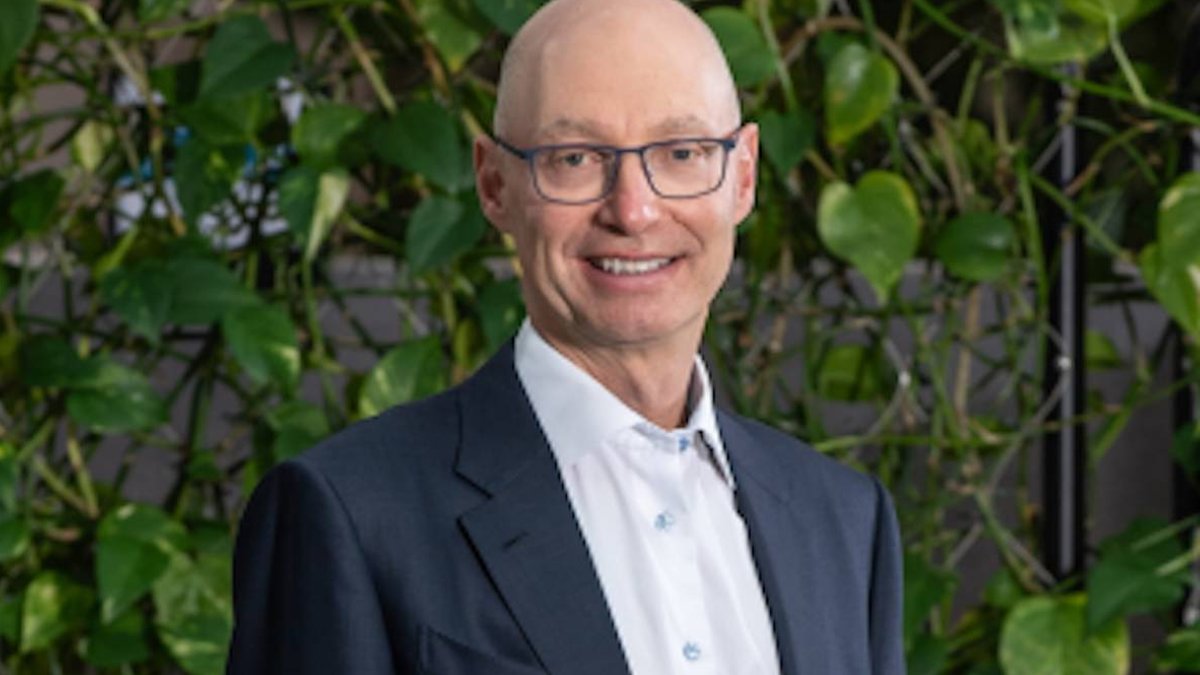
The CEO of the National Reconstruction Fund (NRF), David Gall, received a total compensation of $1.27 million in his first full year, including a $352,716 bonus. This information comes from the NRFC’s 2026 annual report.
Gall’s base salary was $871,409, with the bonus adding another 40.5%. His earnings are nearly double that of Prime Minister Anthony Albanese and $50,000 more than RBA governor Michelle Bullock.
Executive Pay at NRF
Another NRF executive, whose name was not disclosed, received a $432,900 bonus on top of a $690,500 base salary. With super and long service leave, their total package reached $1.17 million.
Two other senior executives averaged $590,191 each, including bonuses of $118,215. A third executive earned $640,996, with a $149,850 bonus.
Gall and the unnamed executive shared $785,616 in bonuses, from a total of $3.66 million in disclosed bonuses. As of June 30, the NRFC owed staff around $4.1 million in bonuses.
NRF’s Investment and Impact
The NRF, launched in 2023 by the Albanese government, committed $1.664 billion across 22 investments in FY26, surpassing its $1.5 billion annual target. This marks a significant increase from $584.5 million the previous year.
The fund’s portfolio includes 31 investments, with over $2.2 billion committed since its inception. This represents approximately 15% of its $15 billion allocation.
For every dollar the NRF invests, private investors contribute $2.61.
The NRF’s investments span $466.9 million in equities, $424 million in loans, and $490 million in other financial assets. Notably, $430 million was placed with banks to fund zero-interest loans for manufacturers and logistics businesses, with $229.5 million already provided through the Economic Resilience Program.
The fund’s portfolio returned 7.7%, exceeding its 5.9%-6.9% benchmark range. Its first realized gain was a $34.8 million profit from selling part of its stake in Liontown, an ASX-listed lithium miner.
The NRF has supported various sectors, including a $150 million commitment to biotech fund Brandon Capital. Brandon Capital invested $60 million in 10 medical science companies, backed by $273 million in private capital.
Five major deals with local tech scaleups totaled nearly $200 million, including investments in Gilmour Space ($75 million), Synchron ($54 million), Applied EV ($30.7 million), Diraq ($20 million), and Omniscient Neurotechnology ($20 million).
The NRF’s annual report highlights its impact on job creation. Portfolio companies employ 8,500 people, with an estimated 2,300 additional positions in the pipeline.
This fund will support early-stage companies in sectors like robotics, quantum computing, and medical science, providing the NRF with access to earlier-stage deals and building its capability in this area.
Gall’s Compensation Structure and NRF’s Investment Philosophy
Gall’s base salary is comparable to managing partners at major venture capital firms. His bonus structure may resemble the carry partners receive on successful investments, though they typically wait for an exit to receive it.
Comparing Executive Pay
While Gall’s compensation is substantial, it is lower than that of some government-owned enterprise leaders. NBN Co CEO Ellie Sweeney earned $3.43 million in FY26, and Australia Post CEO Paul Graham received $3.1 million, including $1.36 million in bonuses.
Snowy Hydro CEO Dennis Barnes earned less than $2 million for the first time in three years, with a base salary of $1.89 million. This decrease was due to cost blowouts and delays in the company’s pumped hydro scheme.
Ian Learmonth, former CEO of the Clean Energy Finance Corporation (CEFC), earned $1.19 million in FY26, approximately $85,000 less than Gall. The CEFC committed $9.1 billion in FY26, significantly more than the NRF’s $1.66 billion.
NRF’s Investment Strategy and Impact
Its $150 million commitment to the Main Sequence NRF Emerging Companies Fund will support early-stage companies with investments under $10 million over five years.
As of June 30, the NRF held $1.51 billion in cash, $1.2 billion more than budgeted. This surplus resulted in net cash used for investing being $609 million below budget, due to slower-than-expected funding drawdowns by companies.


